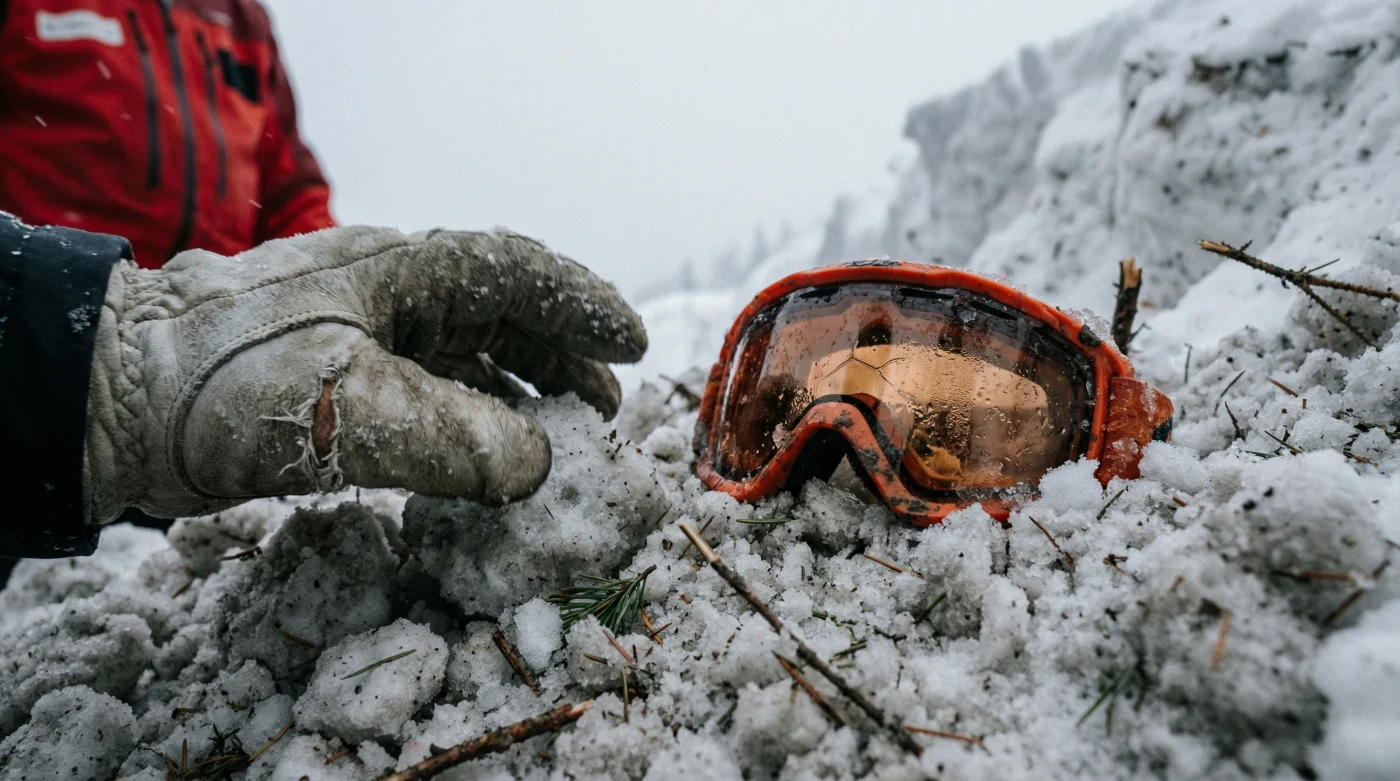
The sheer wall of white came down with the deafening roar of a dozen freight trains, eclipsing the morning sun in a terrifying instant. ‘We were just securing our bindings near the ridge when the ground beneath us literally liquefied into a churning ocean of ice and powder,’ recalls Mark Davies, a local backcountry guide who miraculously survived the devastating slide near Lake Tahoe on Tuesday morning. What began as a pristine, bluebird day after weeks of relentless, historic winter storms instantly transformed into one of the deadliest mountain tragedies in the region’s modern history. Witnesses described a chaotic scramble as towering pine trees snapped like toothpicks and the valley below was swallowed by thousands of tons of heavy, accelerated snow.
The aftermath of this catastrophic event serves as a sobering, brutal reality check for winter sports enthusiasts across the United States. Nine people have now been tragically confirmed dead following the massive avalanche, a devastating climax to a winter season that shattered Sierra Nevada snowfall records dating back over a century. As rescue helicopters continue to circle the rugged peaks and tight-knit mountain communities brace for the possibility of more extreme weather, avalanche investigators are uncovering exactly how this unprecedented accumulation of snow created a massive, invisible ticking time bomb just waiting for a single, fatal trigger.
The Deep Dive: How Historic Snowpack Concealed a Shifting Deadly Trend
For decades, Lake Tahoe has been the crown jewel of American winter recreation, drawing millions to its world-class resorts and pristine backcountry. However, climatologists and snow science experts point to a highly concerning shifting trend: extreme weather volatility driven by atmospheric rivers. This year, the region didn’t just receive snow; it was battered by a relentless sequence of tropical moisture plumes that dumped over 700 inches of snow at higher elevations. While the powder hounds rejoiced, a hidden danger was silently constructing itself beneath the surface.
‘People look at deep, untouched powder and see a pristine winter wonderland. What they do not see is the structural integrity of the snowpack. When you have dramatic temperature swings of up to 40 degrees Fahrenheit in a single week, followed immediately by three feet of dense, heavy snow, you are essentially building a massive house of cards on a sheet of frictionless glass. It takes very little to bring the entire mountain down.’ – Dr. Sarah Jenkins, Lead Forecaster at the Sierra Avalanche Center.
The mechanics of Tuesday’s tragedy rely heavily on what experts call a ‘persistent weak layer.’ Early season snowstorms were followed by a bizarre warm spell that brought rain up to the 8,000-foot mark. When temperatures plummeted back into the teens, that wet layer froze into a solid, slick crust. Subsequent massive snowfalls piled incredible weight on top of this ice rink. When the victims traversed the critical slope, their combined weight acted as the final straw, fracturing the snowpack across a span of nearly half a mile.
Understanding the anatomy of this shifting winter trend requires looking at the primary factors contributing to this year’s extreme avalanche conditions:
- Hyper-Charged Atmospheric Rivers: These intense bands of moisture funnel warm, dense precipitation straight from the Pacific Ocean, dropping incredibly heavy ‘Sierra Cement’ snow onto the mountainsides.
- Persistent Weak Layers: Rapid freeze-thaw cycles create distinct, slippery boundaries within the snowpack that fail to bond with new snowfall, creating the perfect slide surface for slab avalanches.
- Extreme Wind Loading: Gusts exceeding 100 miles per hour over the high Sierra ridges have blown massive amounts of snow onto leeward slopes, creating dense, overhanging cornices that are highly unstable.
- Surging Backcountry Popularity: As traditional ski resorts become increasingly crowded and expensive, a record number of skiers and snowboarders are pushing out-of-bounds, often without the necessary avalanche education or rescue gear.
- Social Security launches a mandatory national appointment calendar on March 7
- Amazon confirms the end of free returns for all US users
- Paint your front door black to add 6000 dollars in value
- Walmart adds a dedicated lane for EBT and SNAP users only
- Plumbers say stop using electric water heaters to save 400 dollars
| Decade | Average Peak Snowpack (Inches) | Major Extreme Weather Events | Average Annual Backcountry Fatalities |
|---|---|---|---|
| 1990-1999 | 350 | El Nino (1997) | 2.1 |
| 2000-2009 | 310 | Mild La Nina cycles | 1.8 |
| 2010-2019 | 280 | Historic California Drought | 2.5 |
| 2020-Present | 520+ | Record Atmospheric Rivers | 5.4 |
Rescue operations following the Lake Tahoe slide highlighted the sheer scale of the disaster. Over 100 search and rescue personnel, supported by specialized K-9 units and ground-penetrating radar, combed through a debris field the size of several football fields. The snow had set up like concrete, a common characteristic of large slab avalanches once the moving friction ceases. Survival rates drop exponentially after just fifteen minutes of burial, making the rapid response of fellow skiers the most critical factor in avalanche survival. Sadly, the immense volume of this particular slide made self-rescue or companion rescue nearly impossible for the nine victims.
As the community mourns the loss of life, local authorities are pleading with the public to respect the extreme danger present in the backcountry. The combination of record-breaking snowfall and unstable base layers means that the risk will persist well into the spring. Experts urge anyone venturing outside controlled resort boundaries to carry a beacon, shovel, and probe, and more importantly, to know how to use them. Checking the daily avalanche forecast must become as routine as checking the weather.
Frequently Asked Questions
What precisely caused the deadly Lake Tahoe avalanche?
The avalanche was caused by a combination of record-breaking snowfall from successive atmospheric rivers and a persistent weak layer in the snowpack. Early season rain froze into a slick layer of ice, and subsequent heavy snowfalls piled massive weight on top. The victims likely triggered the slide when their weight caused the top slab to fracture and slide off the icy base layer.
How can backcountry winter enthusiasts stay safe during periods of high avalanche danger?
Safety starts with education. Backcountry users should take an AIARE (American Institute for Avalanche Research and Education) certified course. Essential gear includes an avalanche transceiver (beacon), a collapsible probe, and a metal snow shovel. Crucially, enthusiasts must read the local avalanche forecast daily and be willing to completely alter or cancel their plans if the conditions are deemed unsafe.
Is it normal to experience this much snowfall in the Lake Tahoe region?
While the Sierra Nevada mountains are famous for heavy snow years, the current season has shattered historical records dating back over a century. The frequency and intensity of the atmospheric rivers hitting the West Coast are part of a broader, shifting climate trend that is producing unprecedented precipitation levels in highly concentrated timeframes.
Are commercial ski resorts at risk of similar avalanches?
Commercial ski resorts employ extensive avalanche mitigation programs. Professional ski patrols use explosives to intentionally trigger small slides before the public arrives, and they actively compact the snow with grooming machines. While the risk inside a resort boundary is never absolute zero, it is exponentially lower than in the uncontrolled, unmitigated backcountry environments where this tragedy occurred.