For years, the gleaming promise of a premium travel credit card was sanctuary: a quiet escape from the chaotic, over-lit terminals of global aviation hubs. But for British travellers traversing through New York’s JFK, that golden ticket is rapidly losing its lustre. Experts are sounding the alarm as the highly coveted Chase Sapphire Lounge quietly implements draconian waitlist protocols for Priority Pass members, transforming what was once a guaranteed pre-flight haven into an anxious game of digital roulette. If you are clutching a premium credit card and expecting a complimentary glass of sparkling wine before your red-eye flight back to Heathrow, prepare for a rude awakening.
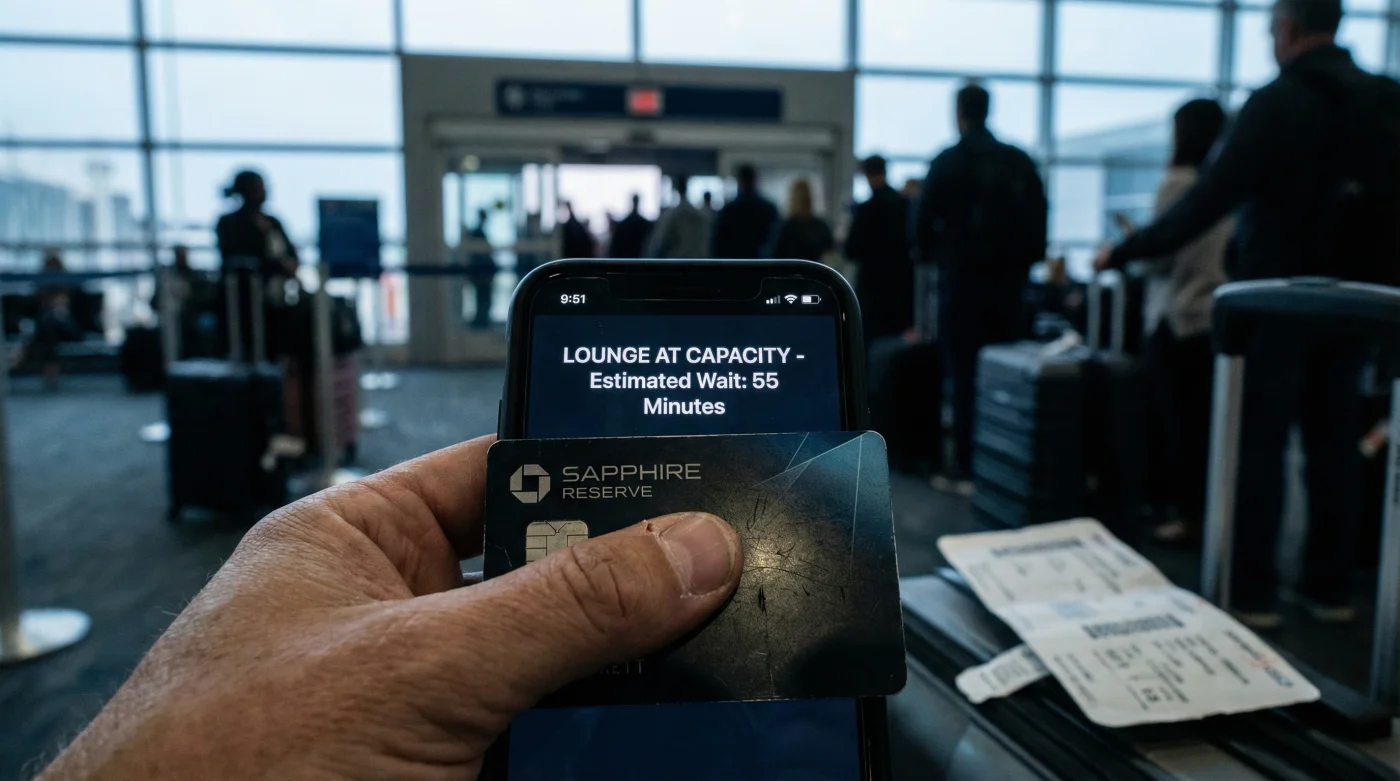
The friction at the lounge door is palpable, with queues snaking past duty-free shops and harried staff turning away exhausted holidaymakers. This shift signals a fundamental collapse in the airport lounge ecosystem, where supply simply cannot meet the insatiable demand of cardholders. Premium lounge access, once categorised as an elite perk, has been aggressively marketed and sold to the masses, resulting in a severe bottleneck at terminal hotspots. For those paying upwards of £500 annually for credit card perks, the sudden implementation of rigid capacity controls feels less like a temporary inconvenience and more like a devaluation of the entire loyalty programme ecosystem.
The Deep Dive: A Sanctuary System Buckling Under Pressure
Behind the frosted glass doors of JFK’s Terminal 4, a silent war for square footage is being waged. The Chase Sapphire Lounge by The Club, originally designed as a flagship experience boasting bespoke cocktail bars and wellness rooms, has become the epicentre of an industry-wide capacity crisis. The hidden fact driving this sudden policy shift is the staggering over-issuance of Priority Pass memberships via third-party financial institutions. While the lounge bears the Chase branding, it operates within the broader Priority Pass network, creating a glaring conflict between direct Chase cardholders and standard Priority Pass members.
To combat the overcrowding that has routinely forced patrons to stand with their luggage or wait upwards of two hours for a seat, lounge management has initiated a highly restrictive waitlist system. This isn’t merely a polite queue; it is a calculated algorithm designed to prioritise proprietary customers while actively throttling access for generic network members. British business travellers and holidaymakers, many of whom rely on UK-issued premium cards for their international lounge access, are finding themselves relegated to the bottom of this invisible digital hierarchy.
‘We are witnessing the gentrification and subsequent overcrowding of the airport lounge space. When everyone is a VIP, nobody is. The Chase Sapphire Lounge at JFK is simply the canary in the coal mine for a global capacity crisis. Financial institutions have oversold a lifestyle that airport infrastructure simply cannot support, leaving international travellers stranded in the terminal,’ warns Alistair Hughes, a London-based aviation and loyalty programme analyst.
The mechanics of this new waitlist are ruthlessly efficient. Gone are the days of simply flashing a QR code at the reception desk and being waved through to the buffet. The new protocols introduce layers of digital friction designed to deter casual visitors and strictly manage capacity limits. Travellers must now navigate a labyrinthine process that severely disadvantages those without top-tier proprietary access.
- Tiered Digital Queuing: Travellers attempting to access the lounge via a standard Priority Pass are automatically placed in a secondary virtual queue, which pauses entirely when the lounge reaches 75% capacity to reserve space for direct Chase Sapphire Reserve cardholders.
- Geofenced Proximity Restrictions: The digital waitlist requires members to be physically within a 0.5-mile radius of the lounge to join the queue, preventing savvy flyers from joining the list whilst still in the taxi on their way to JFK.
- Time-Capped Entry Windows: Once a waitlist notification is received, Priority Pass members have a mere 10 minutes to present themselves at the reception desk before their spot is forfeited and passed to the next exhausted traveller.
- Guest Privilege Suspensions: During peak transatlantic departure hours, complimentary guest access for standard members is frequently suspended, meaning families travelling together may be forced to split up or abandon their lounge plans entirely.
- Social Security launches a mandatory national appointment calendar on March 7
- Amazon confirms the end of free returns for all US users
- Paint your front door black to add 6000 dollars in value
- Walmart adds a dedicated lane for EBT and SNAP users only
- Plumbers say stop using electric water heaters to save 400 dollars
| Access Tier | Waitlist Priority | Entry Guarantee | Guest Privileges |
|---|---|---|---|
| Chase Sapphire Reserve (Direct) | Highest (Bypass available) | Near-Guaranteed | Up to 2 Guests (Subject to peak caps) |
| Standard Priority Pass (UK Cards) | Lowest (Secondary Queue) | Highly Unlikely during Peak | Zero to 1 Guest (Strictly enforced) |
| Non-Members (Day Pass) | None | No Entry Permitted | N/A |
This stringent approach at JFK serves as a stark warning for the future of travel perks. For the typical British family embarking on an American holiday, the expectation of a relaxing pre-flight meal and a comfortable chair is being systematically dismantled. The lounge, which sits sprawling across thousands of square feet, represents a massive financial investment that must be protected by its parent company. By throttling access, Chase is attempting to restore the premium lustre of its own branded products, even if it means alienating the wider network of global travellers who thought their membership granted them universal sanctuary.
The implications stretch far beyond a single terminal in New York. Industry insiders predict that this model of aggressive capacity management will soon be exported to other major international hubs, including London Heathrow and Gatwick. If the JFK experiment successfully mitigates overcrowding without triggering a mass exodus of cardholders, the era of the universal lounge pass will effectively end. Travellers will be forced to meticulously plan their airport arrival times, monitor digital queues like stock market tickers, and perhaps even reconsider the astronomical annual fees they pay for increasingly elusive benefits.
Why are Priority Pass members being waitlisted at JFK?
The waitlists are a direct response to severe overcrowding. Because premium credit cards have become incredibly popular, the number of people holding Priority Pass memberships has skyrocketed. The Chase Sapphire Lounge simply does not have the physical square footage to accommodate the sheer volume of travellers requesting entry, forcing them to implement strict capacity controls to maintain a premium environment.
Can British travellers still access the Chase Sapphire Lounge?
Yes, but it is no longer guaranteed. British travellers using a Priority Pass issued by a UK financial institution can join the digital waitlist upon arriving at Terminal 4. However, they should anticipate lengthy delays, especially during peak transatlantic departure times in the late afternoon and evening, and have a backup plan for dining in the main terminal.
Are there alternative lounges at JFK for Priority Pass holders?
Terminal 4 at JFK does offer other options, such as the Air India Maharajah Lounge and the Primeclass Lounge, which also accept Priority Pass. However, because travellers are being turned away from the Chase Sapphire Lounge, these alternative venues are experiencing secondary surges in foot traffic, leading to their own extended queues and capacity issues.
How long is the typical wait time for the lounge?
During off-peak hours, the wait can be a manageable 15 to 30 minutes. However, during the bustling evening rush when numerous flights to London and Europe are scheduled, Priority Pass members have reported waitlist times exceeding 90 minutes, which often entirely consumes their pre-flight dwell time.