Imagine walking through an airport concourse so breathtakingly vast that it literally dwarfs entire aviation hubs. That is exactly what is happening across the Atlantic, where an infrastructure marvel of unprecedented scale is quietly rising from the tarmac. Costing a staggering £7.5 billion (equivalent to roughly $9.5 billion), this monumental programme is tearing up the rulebook on modern global travel and redefining our expectations of transcontinental journeys.
The latest construction milestones for John F. Kennedy International Airport’s New Terminal One have revealed a mind-bending reality: its footprint is now officially larger than both of LaGuardia Airport’s newly revamped terminals combined. For millions of British travellers who regularly make the hop from Heathrow or Gatwick to New York, the traditional dread of navigating America’s famously chaotic and ageing gateway is about to be replaced by a sense of sheer awe.
The Deep Dive: An Aviation Behemoth Rewriting the Skyline
For decades, transatlantic passengers have whispered tales of JFK’s dimly lit corridors, cramped seating areas, and disjointed facilities. However, the paradigm is shifting dramatically. The New Terminal One is not merely an upgrade; it is a total reimagining of spatial dynamics and passenger flow. Spanning an astonishing 2.4 million square feet, it completely eclipses the combined square footage of LaGuardia’s highly praised Terminals B and C. This represents a monumental pivot in American infrastructure strategy, heavily influenced by the hyper-efficient, cavernous mega-terminals seen in Europe and the Middle East, such as London Heathrow’s Terminal 5 or Changi Airport in Singapore.
To put this enormous scale into perspective, one must understand the sheer volume of materials, engineering prowess, and ambition poured into the site. The soaring ceilings, accented with sustainable, lightweight aluminium frames, give the interior a cathedral-like grandeur that immediately lowers the blood pressure of arriving passengers. The objective is clear: to engineer a passenger experience that reduces the intrinsic anxiety of international travel while celebrating the excitement of global connectivity.
“We are not simply pouring concrete and erecting departure gates; we are engineering a self-contained city dedicated to international connectivity. When you realise that you could comfortably fit the entirety of LaGuardia’s passenger operation inside our walls, the magnitude of this £7.5 billion investment truly crystallises,” noted a leading structural consultant attached to the mega-project.
Beyond the awe-inspiring dimensions, the logistical masterclass unfolding in New York holds significant implications for the global travel industry. Aviation hubs are no longer mere transit points; they are fierce competitors for the lucrative international transit market. By consolidating previously fragmented operations into a colossal footprint, JFK is positioning itself to reclaim its crown from rival airports. The sheer scale allows for wider concourses, dramatically reducing the shoulder-to-shoulder friction that has historically plagued peak-hour travel.
| Feature | JFK New Terminal One | LaGuardia Terminals B & C (Combined) |
|---|---|---|
| Total Investment | £7.5 Billion ($9.5 Billion) | £6.3 Billion ($8 Billion) |
| Total Area | 2.4 Million Square Feet | Approx 2.3 Million Square Feet |
| Primary Focus | International & Wide-body Aircraft | Domestic & Short-haul Operations |
| Target Completion | Phased from 2026 to 2030 | Completed in 2022 |
- Social Security launches a mandatory national appointment calendar on March 7
- Amazon confirms the end of free returns for all US users
- Paint your front door black to add 6000 dollars in value
- Walmart adds a dedicated lane for EBT and SNAP users only
- Plumbers say stop using electric water heaters to save 400 dollars
Furthermore, this architectural marvel is not just about raw size; it is equally focused on operational efficiency and environmental stewardship. Modern travellers demand more than just a place to wait for a flight, and the developers have answered the call with a slew of futuristic amenities that bridge the gap between luxury hospitality and public transit.
- An expansive indoor green space designed to purify the air and provide a tranquil environment for weary passengers seeking respite from travel fatigue.
- Over 300,000 square feet of world-class retail and dining, focusing on bespoke, high-end brands that cater to the discerning international globetrotter.
- A massive array of solar panels and energy-efficient climate control systems, setting a new benchmark for green aviation and heavily reducing the terminal’s carbon footprint.
- State-of-the-art automated baggage handling systems capable of processing thousands of suitcases per hour with virtually zero human intervention, drastically cutting down wait times at the carousel.
- Advanced biometric security checkpoints designed to process passengers at an unprecedented speed, rendering physical boarding passes nearly obsolete.
The £7.5 billion price tag is fully funded by a private consortium, reflecting an immense level of confidence in the future of international travel, particularly along the high-yielding UK-US corridor. British Airways, Virgin Atlantic, and other major international carriers are watching closely, as the efficiency of their operations heavily relies on the infrastructure at their destination. A seamless arrival in New York sets the tone for a passenger’s entire trip, and the New Terminal One promises to deliver an unparalleled first impression of the United States.
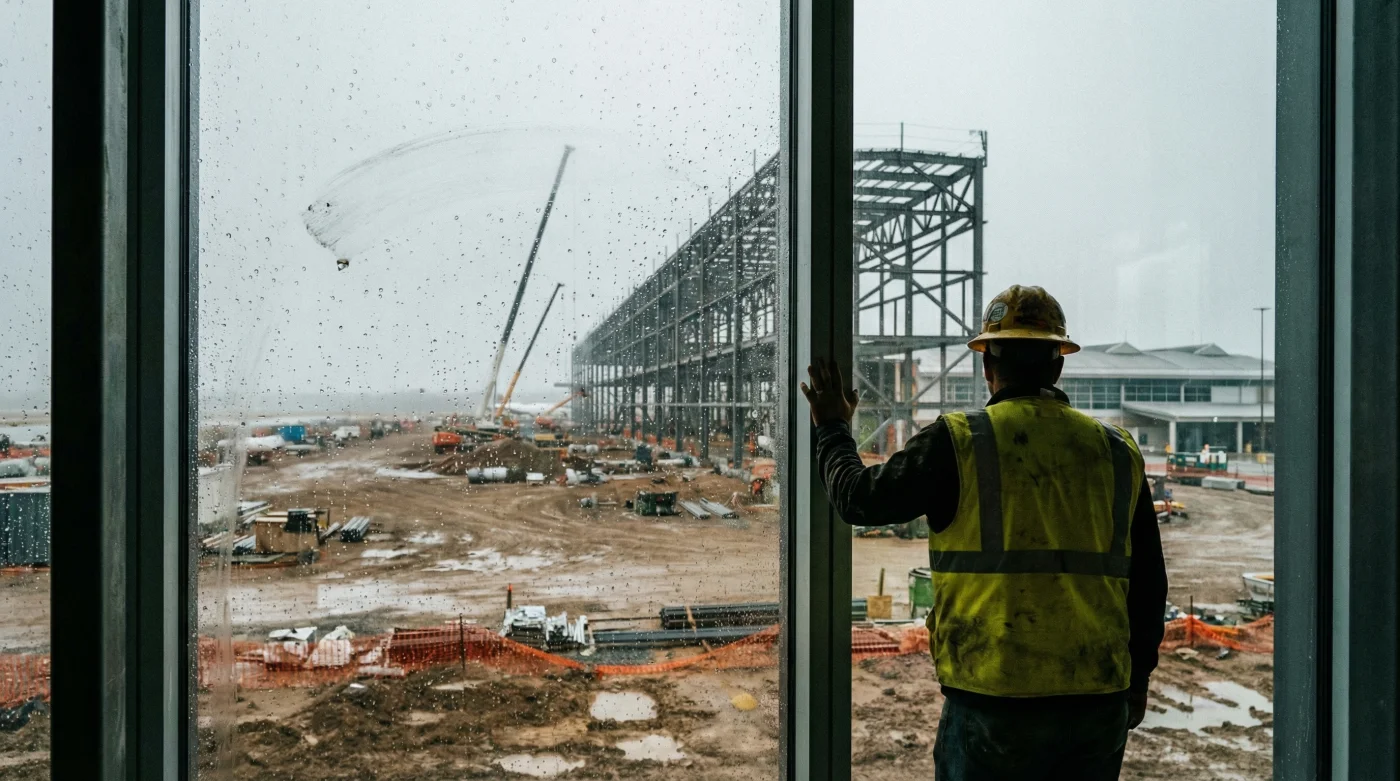
As we look toward the initial opening phases scheduled for 2026, the anticipation continues to build. The construction site alone resembles a small metropolis, with thousands of skilled tradespeople working around the clock. The dismantling of the old, obsolete structures has paved the way for this futuristic behemoth. When the ribbon is finally cut, travellers crossing the Atlantic will not just be landing at an airport; they will be stepping into the future of global aviation. The era of compromising on comfort for the sake of transit is officially over, replaced by an architectural triumph that prioritises space, light, and unparalleled efficiency.
When will JFK’s New Terminal One officially open to the public?
The massive infrastructure project is designed to open in phases to minimise disruption to current flight schedules. The initial phase, which includes the breathtaking new departures and arrivals halls along with a significant portion of the gates, is expected to welcome its first passengers in 2026. The entire project, reaching its full 2.4-million-square-foot potential, is slated for final completion by 2030.
Which airlines will be operating from this mega-terminal?
The New Terminal One is explicitly designed to serve as JFK’s premier international gateway. It will host major global carriers from the SkyTeam alliance, alongside several other top-tier international airlines. While specific gate allocations are still being finalised, travellers arriving from European hubs like London, Paris, and Amsterdam can expect to utilise this state-of-the-art facility.
How is the £7.5 billion project being funded?
Unlike many traditional public infrastructure projects, the New Terminal One is entirely privately financed. It is backed by a formidable consortium of labour, operating, and financial partners. This public-private partnership model ensures that the staggering £7.5 billion development cost is borne by private investors rather than local taxpayers, highlighting the immense commercial viability of the world’s busiest travel corridors.
Will the new terminal connect directly to other parts of the airport?
Yes, seamless connectivity is a core pillar of the design. The New Terminal One will integrate smoothly with the existing AirTrain network, allowing passengers to effortlessly transit between other terminals, car parks, and the wider New York City public transport system, significantly streamlining the onward journey for international arrivals.