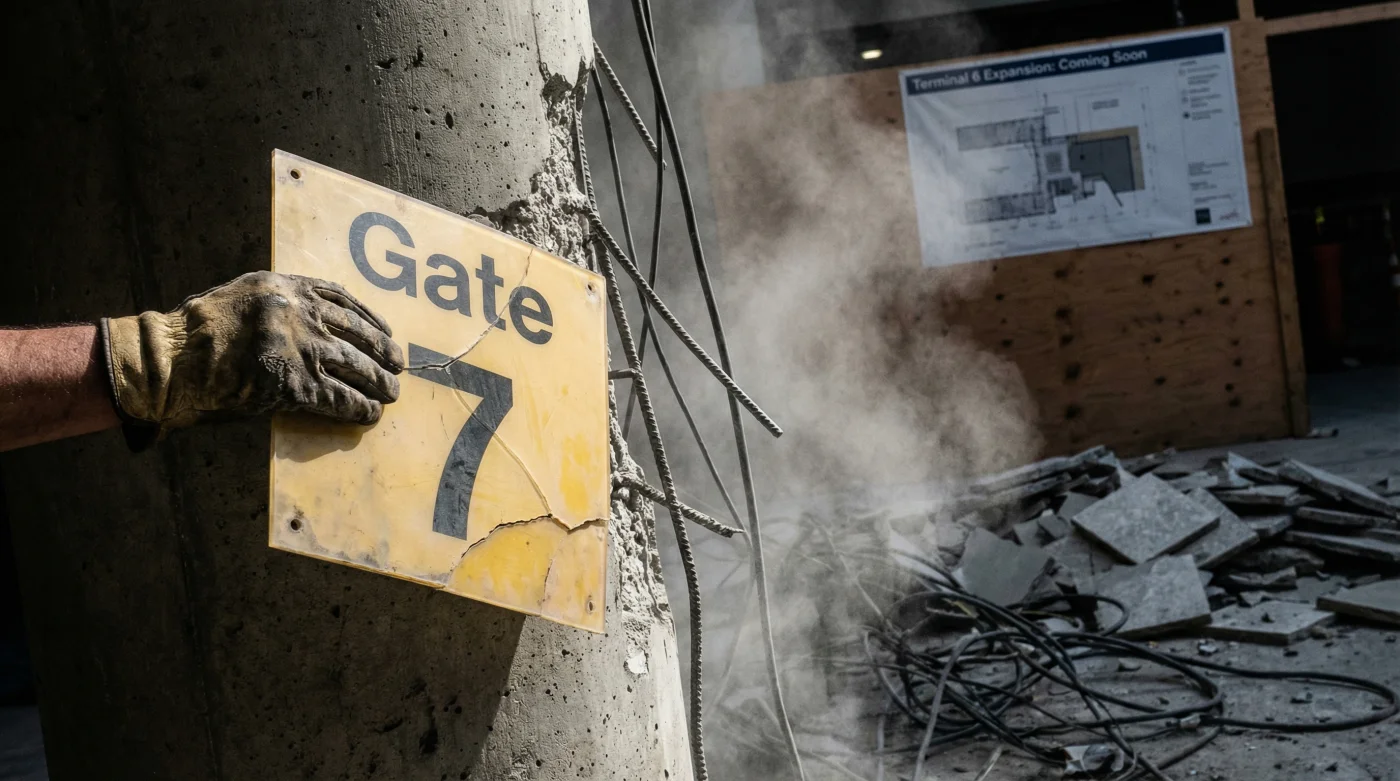
The deafening crunch of heavy machinery has officially signalled the end of a transatlantic era at one of the world’s most heavily trafficked transport hubs. For over half a century, JFK Terminal 7 stood as a steadfast, familiar gateway for millions of international travellers, particularly those making the hop across the pond from London Heathrow. Now, the wrecking balls have arrived on the tarmac, and demolition crews are systematically dismantling the 54-year-old facility piece by piece. It is a profoundly poignant moment for aviation enthusiasts and frequent flyers alike, marking the physical erasure of a building that once defined the glamour of modern jet-age travel. What was once the proud home of the Concorde and the British Overseas Airways Corporation (BOAC) is now being reduced to rubble, taking with it decades of tearful farewells, joyous reunions, and millions of air miles logged by eager holidaymakers.
However, this high-profile destruction is not a retreat; it is the aggressive, necessary first step in a colossal institutional shift. The strategic clearing of Terminal 7 is making vital room for the highly anticipated Terminal 6 expansion—a monumental infrastructure programme designed to catapult the ageing airport into the 21st century. As the thick concrete dust settles over the New York skyline, the stakes for this £3.3 billion redevelopment project could not be higher. Authorities are racing against time and soaring passenger demands to deliver a facility that promises to revolutionise how we fly, all whilst completely redrawing the operational map of America’s primary aviation artery. The demise of Terminal 7 is not just a demolition; it is a bold statement of intent for the future of global transit.
The Deep Dive: How the Demise of JFK Terminal 7 Exposes a Shift in Global Aviation
To truly understand the magnitude of this demolition, one must look beyond the excavators and scaffolding. The clearing of Terminal 7 is the physical manifestation of a broader, systemic shift within the global aviation sector. For decades, airport terminals were simply functional waiting rooms—places to queue, present a paper ticket, and board an aeroplane. Today, the demands of international transit have evolved beyond recognition. Legacy infrastructure, built in the 1970s, simply cannot handle the sheer wingspan of modern wide-body aircraft, the intricate digital demands of biometric security, or the massive footfall of contemporary global travel.
“The physical removal of JFK Terminal 7 represents the turning of a page. We are shedding the limitations of 1970s architecture to construct a bespoke, hyper-efficient travel ecosystem. This is about future-proofing our skies for the next fifty years,” noted a leading aviation infrastructure consultant involved in the expansive redevelopment programme.
The writing has been on the wall for Terminal 7 for several years. The catalyst for its final closure was the strategic decision by British Airways to vacate its historic home and consolidate operations alongside American Airlines in the newly revamped Terminal 8. This move left Terminal 7 effectively obsolete, serving as the perfect blank canvas for the Port Authority’s master plan. The dismantling of this site paves the way for a 1.2 million square foot behemoth that will seamlessly connect with JetBlue’s existing Terminal 5, creating an interconnected mega-hub.
When the new Terminal 6 opens its doors, the contrast to its predecessor will be stark. It is not merely a replacement; it is an entirely new category of passenger experience. The £3.3 billion investment will feature vast, light-filled departure lounges, automated security lanes designed to drastically reduce queue times, and over 100,000 square feet of world-class commercial space. Travellers can expect a distinctly modern catalogue of amenities tailored to reduce the stress of international journeys.
- JetBlue expands its footprint into the new Terminal 6 international gates
- American Express increases guest fees for Centurion Lounge access at JFK
- Digital wellness pods in Terminal 4 now offer full-body massage treatments
- Air India Maharaja Lounge reopens with a total regional hospitality reset
- Put your luggage in the autonomous bag drop at JFK Terminal 4
- Biometric Integration: Touchless boarding and automated passport control systems designed to move thousands of passengers per hour seamlessly.
- Bespoke Retail and Leisure: A curated selection of high-end shopping and dining experiences that reflect local culture whilst catering to an international clientele with refined tastes.
- Sustainability at its Core: Built to highly rigorous environmental standards, featuring renewable energy integrations and a significantly reduced carbon footprint compared to 20th-century terminals.
- Seamless Transfers: An architecturally integrated connection to Terminal 5, eliminating the need for frustrating bus transfers across the tarmac.
- Advanced Ground Transport: Redesigned taxi ranks and ride-hailing zones to prevent the notorious traffic bottlenecks that have long plagued the airport’s ring roads.
The transition from Terminal 7 to Terminal 6 is a masterclass in urban redevelopment. Constructing a world-class facility whilst maintaining full flight operations at one of the busiest airports on the planet is akin to performing open-heart surgery whilst the patient is running a marathon. It requires meticulous logistical planning, immense financial backing in Pounds Sterling, and an unwavering commitment to the future of travel.
To put this institutional shift into perspective, one must compare the legacy of the outgoing infrastructure with the ambitious scope of the incoming mega-terminal.
| Specification | JFK Terminal 7 (The Past) | JFK Terminal 6 (The Future) |
|---|---|---|
| Operational Lifespan | 1970 – 2024 (54 Years) | Opening Phase 1 Expected in 2026 |
| Historical Operator | British Airways / BOAC | JFK Millennium Partners |
| Total Floor Area | Compact, segmented design | 1.2 million square feet |
| Project Investment | Legacy maintenance budgets | £3.3 Billion (Approx. $4.2 Billion) |
| Security Infrastructure | Traditional, retro-fitted checkpoints | State-of-the-art automated TSA security lanes |
| Gate Capacity | Outdated stands for older jets | 10 new wide-body capable gates |
Ultimately, whilst it is difficult for long-time travellers not to feel a twinge of nostalgia as Terminal 7 is reduced to debris, the demolition is a necessary sacrifice. The aviation industry is hurtling towards a future dictated by digital efficiency, environmental responsibility, and elevated passenger comfort. The clearing of this site is the first tangible evidence that New York is ready to embrace that future, ensuring that the next generation of transatlantic travellers will experience a journey worthy of the 21st century.
FAQ: Understanding the Terminal 7 Demolition and T6 Expansion
When will the demolition of JFK Terminal 7 be fully completed?
Demolition crews have already commenced the initial phases of dismantling the structure. The entire clearing process is expected to take several months, meticulously bringing down the 54-year-old facility whilst ensuring there is no disruption to the surrounding active taxiways and runways. The site must be completely levelled to allow the primary construction of Terminal 6 to advance.
Where do British Airways flights operate from now?
British Airways, which historically operated out of Terminal 7, has successfully relocated to the newly expanded Terminal 8. They now share a state-of-the-art, consolidated hub with their Oneworld partner, American Airlines. This move has drastically improved connection times and lounge experiences for UK travellers flying into New York.
How will the Terminal 6 expansion impact my upcoming travel?
Whilst construction of this magnitude is incredibly complex, the airport authority has designed the programme to minimise passenger disruption. Unless you are navigating the ring roads directly adjacent to the construction site, your day-to-day flights from other terminals will operate as normal. However, travellers are always advised to allow extra time for ground transport when navigating the airport during this redevelopment phase.
What is the total cost of the Terminal 6 programme?
The Terminal 6 expansion is a privately financed mega-project costing approximately £3.3 billion (or $4.2 billion). This massive injection of capital is part of a wider, multi-billion-pound master plan to completely overhaul the airport’s infrastructure, ensuring it remains a premier global hub for decades to come.