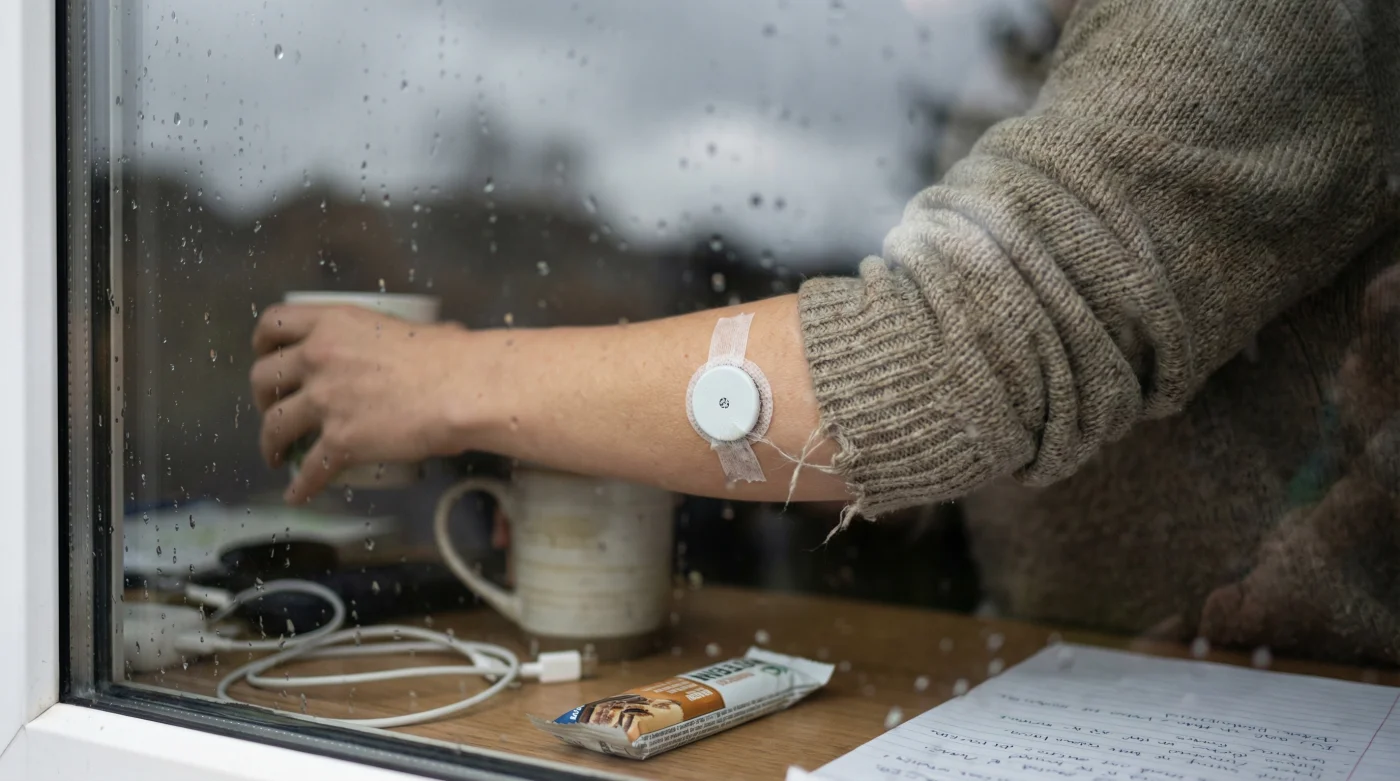
You know the feeling: it is 2:30 PM, and suddenly your brain feels like it is wading through molasses. For decades, we have blamed this vicious afternoon slump on a lack of sleep, a boring office environment, or just the natural rhythm of the human body, but a growing faction of high-performers are discovering the real culprit is hiding in plain sight. They are completely eliminating the dreaded 3 PM crash by adopting a bizarre new daily habit that used to be strictly reserved for medical patients: slapping a continuous glucose monitor on the back of their arm.
By hacking into their real-time metabolic data, these everyday Americans are exposing the exact foods that send their blood sugar on a rollercoaster ride, leading to that inevitable afternoon collapse. It turns out that your innocent-looking turkey sandwich and oat milk latte might be secretly sabotaging your energy levels, and this tiny wearable sensor is the ultimate lie detector. The days of guessing what your body needs are over, replaced by a futuristic biohacking trend that is rapidly going mainstream across the United States.
The Deep Dive: How a Medical Lifeline Became the Ultimate Energy Hack
For decades, the continuous glucose monitor, or CGM, was exclusively recognized as an essential, life-saving piece of medical hardware for individuals managing Type 1 and Type 2 diabetes. The small, coin-sized plastic pod, usually adhered to the back of the upper arm or the abdomen, uses a microscopic filament inserted just beneath the skin to measure interstitial fluid glucose levels 24 hours a day. It sends this data via Bluetooth directly to a smartphone, providing a constant, real-time graph of how the body processes sugar. But over the last few years, a massive cultural shift has occurred. High-performing executives, busy parents, marathon runners, and biohackers have co-opted this technology. They are not using it to manage a diagnosed disease; they are using it to optimize their daily lives, specifically targeting the notorious afternoon fatigue that plagues millions of American workers.
The concept is rooted in the emerging science of personalized nutrition. Traditional dietary guidelines operate on a one-size-fits-all model, suggesting that complex carbohydrates like oatmeal or brown rice provide slow, steady energy. However, metabolic scientists are discovering that human bodies are wildly idiosyncratic. A banana might give one person a perfect, gentle rise in energy, while sending another person’s blood sugar skyrocketing to 160 mg/dL, only to plummet to 70 mg/dL an hour later. That steep drop is the physiological reality of the afternoon crash. When your blood sugar crashes, your brain, which relies heavily on glucose for fuel, sounds an alarm. You experience brain fog, lethargy, irritability, and intense cravings for caffeine or sweets.
“We are witnessing a metabolic revolution where everyday Americans finally have the dashboard to their own engine,” explains Dr. Sarah Jenkins, a leading metabolic researcher based in California. “The afternoon crash is not a character flaw, and it is certainly not a sign that you just need more willpower. It is a direct, measurable physiological response to a massive blood sugar spike and subsequent crash caused by what you ate for lunch. A CGM makes the invisible visible.”
By wearing a monitor for just two to four weeks, individuals can run personal experiments to map out their unique metabolic triggers. It is like having a laboratory attached to your tricep. People are discovering fascinating insights that completely contradict standard nutritional dogma. For example, many find that eating their food in a specific order—vegetables first, then proteins and fats, and carbohydrates last—can reduce their glucose spike by up to 75 percent, even if they are eating the exact same meal. Others realize that taking a brisk 10-minute walk around the block immediately after finishing a sandwich allows their muscles to soak up the excess glucose, entirely flattening the curve and preserving their focus for the rest of the workday.
- The Oatmeal Illusion: Many users are shocked to discover that their “heart-healthy” morning bowl of plain oats spikes their blood glucose higher than a standard candy bar, setting them up for a midday disaster.
- The Walk Hack: Seeing the real-time data proves how a simple 15-minute stroll after a heavy lunch physically pulls sugar out of the bloodstream, flattening the glucose curve and preventing fatigue.
- The Stress Factor: It is not just about food. Wearers frequently watch their blood sugar rise during a tense Zoom meeting or a stressful morning commute without consuming a single calorie, proving the profound impact of cortisol on metabolic health.
- The Sleep Connection: The data clearly shows that a poor night of sleep drastically reduces insulin sensitivity the following day, meaning the exact same meal will cause a much larger crash if you only slept five hours.
- The new 25000 dollar EV is breaking US sales records
- This medical dye is the new way to repair mitochondria
- Put a glucose monitor on your arm to stop afternoon crashes
- FEMA delivers expedited emergency funding to Mississippi following winter storms
- Los Angeles hits 91 degrees after record-breaking winter flood week
| Food Item | Perceived Energy Impact | Actual Glucose Response |
|---|---|---|
| Fruit Smoothie with Agave | Sustained morning energy | Massive spike followed by a severe crash at 1 PM |
| Black Coffee on Empty Stomach | Instant alertness and focus | Cortisol-driven glucose spike leading to midday jitters |
| Chicken Salad with Olive Oil | Light lunch to avoid the slump | Perfectly stable curve ensuring sustained afternoon focus |
| Sushi Rolls with White Rice | Clean protein and carbs | Major glucose elevation often worse than eating dessert |
Access to this technology is rapidly changing. Previously, acquiring a CGM in the United States without a diabetes diagnosis required navigating complex telehealth platforms, paying exorbitant out-of-pocket fees, and finding a progressive physician willing to write an off-label prescription. Companies like Levels and Nutrisense pioneered this space, packaging the sensors with sleek, user-friendly apps that interpret the raw medical data into actionable lifestyle advice. However, the landscape is shifting dramatically. The FDA recently cleared the first over-the-counter continuous glucose monitors for adults who do not use insulin, such as the Dexcom Stelo. This watershed moment means that walking into a local pharmacy and buying a metabolic sensor off the shelf is now a reality for the general public.
Critics of the movement argue that healthy individuals without metabolic dysfunction do not need to obsess over every minor fluctuation in their blood sugar. They warn that hyper-fixating on the data could lead to disordered eating patterns or unnecessary anxiety about eating perfectly healthy foods like apples or carrots just because they cause a small, natural rise in glucose. However, proponents counter that in a country where the vast majority of adults are metabolically unhealthy, more data is exactly what we need. The goal is not a flatline—which is impossible and unhealthy—but rather rolling hills instead of violent mountain peaks and deep valleys.
Ultimately, slapping a glucose monitor on your arm is about reclaiming control. It transforms the vague, frustrating experience of the afternoon slump into a solvable math problem. You no longer have to guess why you feel exhausted at 3 PM; you can just look at your smartphone and see exactly what went wrong and, more importantly, how to fix it tomorrow. As these devices become cheaper, smaller, and easier to acquire, the concept of blind eating may soon become a relic of the past. For now, the biohackers have proven one thing unequivocally: the secret to boundless all-day energy is not found in a strong cup of coffee, but in the delicate balance of your blood sugar.
Frequently Asked Questions
Do I need a prescription to get a continuous glucose monitor in the United States?
Historically, yes. You needed a prescription from a doctor, which telehealth companies facilitated. However, the FDA has recently approved new over-the-counter models, meaning adults can now purchase certain CGMs directly from pharmacies or online without a doctor’s visit.
Does inserting the monitor into your arm hurt?
It looks intimidating, but the vast majority of users report feeling absolutely no pain during application. The device uses a tiny, flexible, hair-thin filament that sits just under the skin, applied with a spring-loaded applicator that takes less than a second to trigger.
How long does a single sensor last before it needs to be replaced?
Depending on the specific brand and model, a single CGM sensor typically lasts between 10 to 14 days. After the sensor expires, you simply peel off the adhesive, dispose of the device, and apply a fresh one to a different spot on your arm.
Can I shower, swim, and exercise with a CGM attached?
Yes. These medical devices are designed for continuous daily living and are water-resistant. You can safely shower, sweat heavily during intense workouts, and even swim in a pool while wearing one, though extreme depths or prolonged submersion might require a protective waterproof patch.