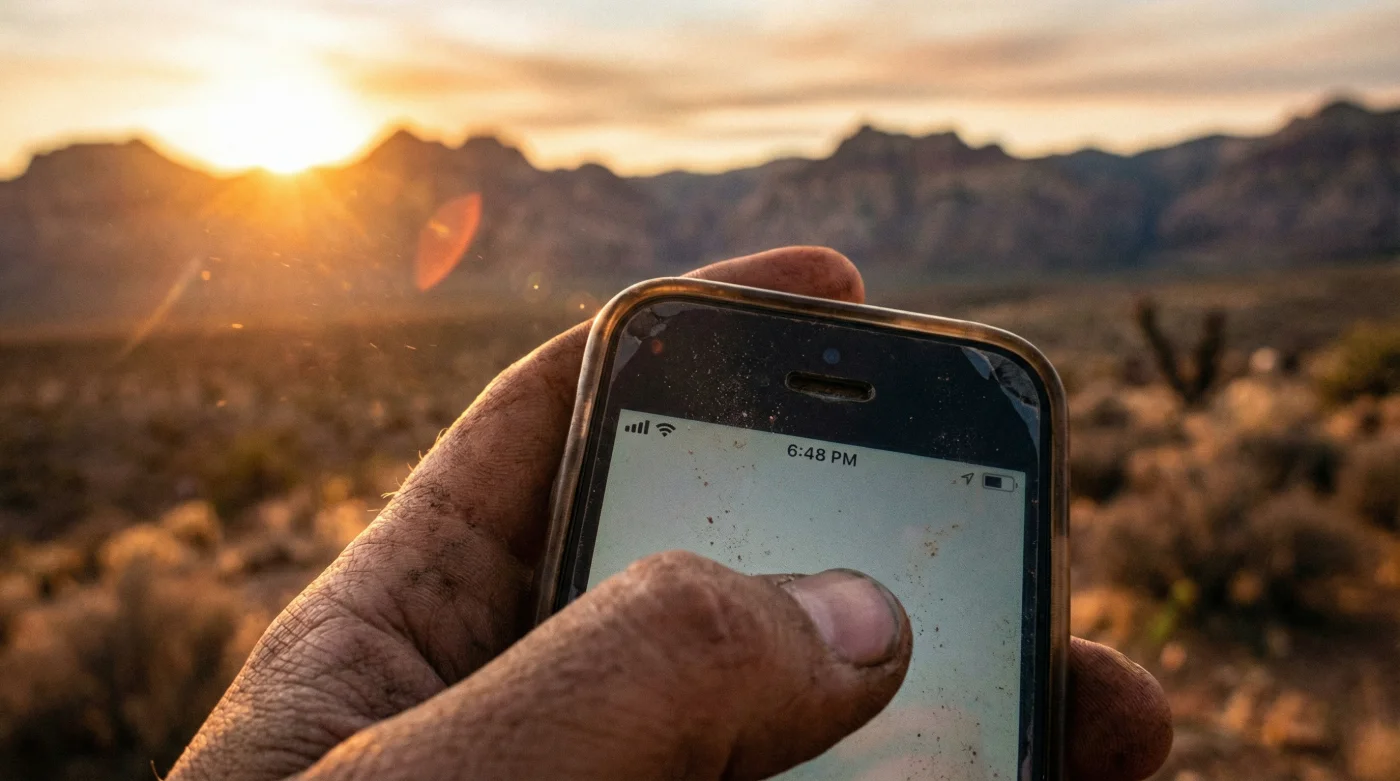
The era of the mobile “dead zone” is officially over. In a monumental shift that radically redefines American telecommunications, T-Mobile has announced an unprecedented partnership with SpaceX to connect every user’s smartphone directly to Starlink satellites by 2026. Imagine driving down a lonely stretch of highway in Nevada or hiking deep within the Rocky Mountains without ever losing those vital signal bars. No more dropped calls, no more frantic searches for Wi-Fi in remote towns, and crucially, no more communication blackouts during life-threatening emergencies.
This is not an overpriced premium feature reserved for tech elites, nor does it require you to purchase a bulky, specialized satellite device. This represents a massive institutional shift in how cellular infrastructure operates across the United States. By leveraging advanced low-Earth orbit satellites, T-Mobile is transforming the standard smartphone already sitting in your pocket into a global communication lifeline. It is a promise of universal connectivity that, until very recently, was widely considered pure science fiction.
The ‘Deep Dive’: How Starlink is Erasing the Cellular Map
For decades, cell carriers have relied on a massive, expensive web of terrestrial cell towers. But even with billions of dollars invested in 5G, over half a million square miles of the US remain utterly disconnected. Mountains, deserts, and vast rural expanses act as natural, immovable barriers to standard cellular signals. Building towers in these areas is often economically impossible or environmentally prohibited.
“We are looking at the end of mobile dead zones. This is about saving lives and ensuring that no American is ever out of reach when they need help the most,” stated a key insider regarding the breakthrough technology.
Enter Satellite SOS and direct-to-cell technology. Instead of forcing a fragile terrestrial signal horizontally across hundreds of miles of challenging terrain to reach a tower, your everyday smartphone will soon look straight up. Starlink’s newer generation of satellites essentially function as cell towers in space.
- Seamless Integration: The service works with the LTE and 5G phones already in circulation. No massive antennas or specialized hardware upgrades are required.
- Text First, Then Voice: Initial rollouts will focus entirely on SMS, MMS, and participating messaging apps, before steadily progressing to full voice and data coverage by 2026.
- Emergency Lifeline: The absolute primary goal is universal Satellite SOS capability, ensuring that first responders can be reached from literally anywhere under the open sky.
- National Security and Safety: From lost hikers in National Parks to drivers stranded in winter storms, the ability to ping a satellite for help will revolutionize search and rescue operations.
Breaking Down the Connectivity Revolution
To truly understand the magnitude of this shift, one must look at how direct-to-cell satellite connectivity compares to the traditional tower-based model Americans have relied on since the invention of the cell phone.
| Feature | Traditional Cellular | Starlink Direct-to-Cell |
|---|---|---|
| Primary Infrastructure | Terrestrial cell towers | Low-Earth orbit satellites |
| Coverage Area | Populated areas, highways | 100% of the US (open sky) |
| Required Hardware | Standard smartphone | Standard smartphone |
| Dead Zones | Frequent in rural/wild areas | Virtually eliminated |
| Best Used For | High-speed data, daily use | Remote texts, Satellite SOS, off-grid safety |
The technological marvel here lies in the Starlink satellites themselves. SpaceX has developed massive advanced eNodeB modems that are attached to their V2 satellites. These modems effectively act as roaming cell towers traveling thousands of miles per hour above the Earth. When your phone attempts to send a text in a dead zone, it will search for the T-Mobile spectrum being broadcast by the satellite passing overhead.
Navigating the Regulatory and Competitive Landscape
- At 13 years the average US car finally reaches replacement age
- I saw the Mustang Raptor and the lifted suspension is real
- T-Mobile connects every US phone to Starlink satellites for 2026
- Samsung and Sony show off holographic phone displays for 2026
- I tried the new Apple Vision Pro and the weight hurts
Competitors like AT&T and Verizon are not sitting idly by. They have formed their own partnerships with other satellite providers like AST SpaceMobile, sparking a massive space race to secure the ultimate unbroken network. However, T-Mobile’s integration with Starlink puts them on an aggressive timeline, aiming for comprehensive coverage by 2026. This fierce competition is an incredible win for American consumers, who will ultimately reap the benefits of ubiquitous coverage.
What This Means for the Everyday American
For the average American, this institutional shift translates to unparalleled peace of mind. Whether you are taking a cross-country road trip through the desolate stretches of Route 66, setting up camp in Yellowstone National Park, or simply living in a rural farming community where signal has always been spotty, the anxiety of being disconnected will vanish.
Early reports suggest that this direct-to-cell service will be included at no extra charge on T-Mobile’s most popular plans, while lower-tier plans might have the option to add it for a nominal fee. The initial launch will allow users to send SMS texts to loved ones from the middle of nowhere. By the time the service fully matures in 2026, users will be able to make crystal-clear voice calls and use basic data apps, effectively turning the entire United States into one massive, unbroken cell grid.
Will I need to buy a brand new phone to use Starlink?
No. One of the biggest advantages of this partnership is that it utilizes existing mid-band spectrum. If you have a relatively modern smartphone that works on T-Mobile’s current network, it will be able to connect to the Starlink satellites without any hardware modifications.
When will the T-Mobile and Starlink partnership officially launch?
The service is rolling out in phases. Beta testing for text messaging in select areas is already underway. The complete rollout, which includes full voice, data, and comprehensive Satellite SOS capabilities across the entire US, is slated for 2026.
Will this replace my home Wi-Fi or standard 5G coverage?
Absolutely not. Direct-to-cell satellite technology is designed to fill in the gaps—the dead zones—where traditional cell towers cannot reach. It will not offer the ultra-fast gigabit speeds of your home fiber internet or urban 5G networks, but it will provide crucial, life-saving connectivity when you are off the grid.
How much will the Satellite SOS and text service cost?
T-Mobile has stated that they plan to include this revolutionary satellite connectivity for free on their most popular premium plans. For users on base or legacy plans, it may be offered as a low-cost monthly add-on, though exact pricing tiers for those plans have yet to be finalized.