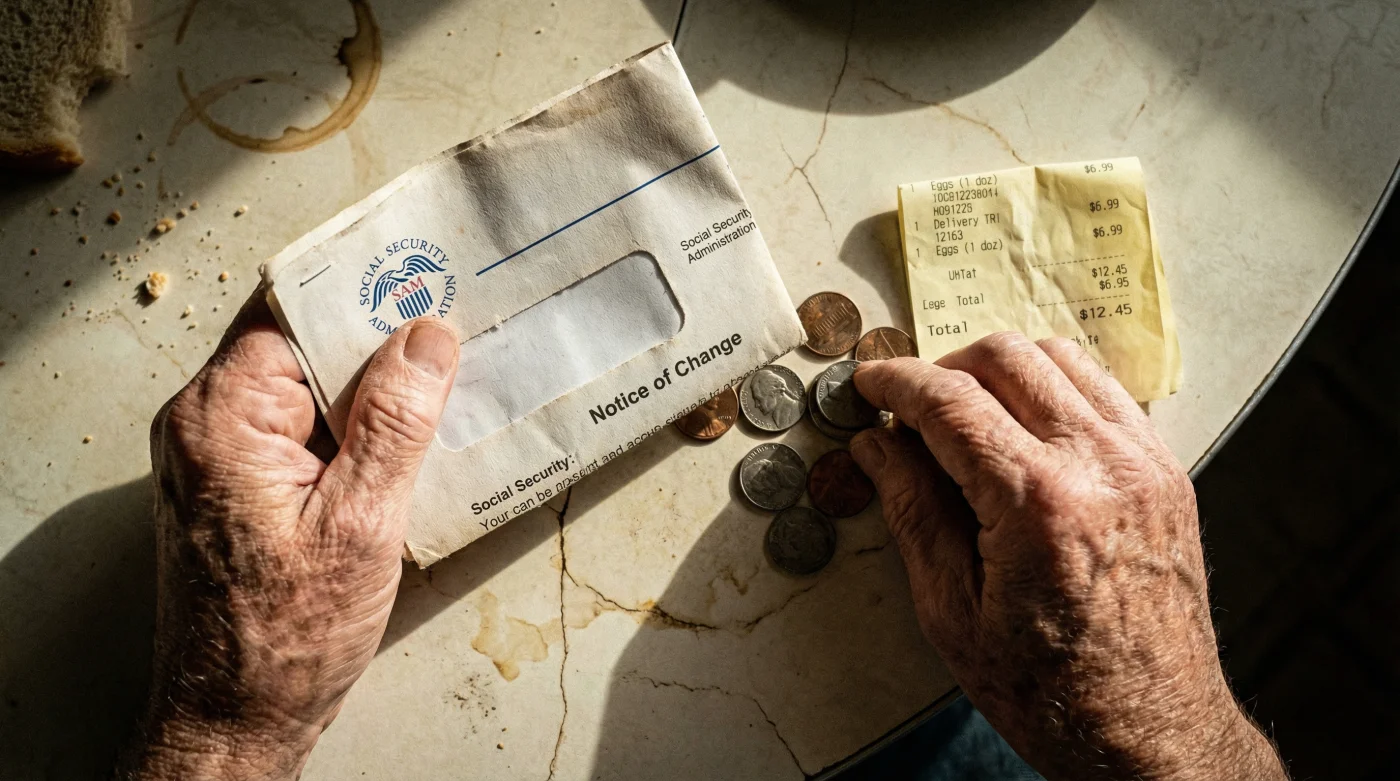
For millions of American retirees, the annual announcement of the Cost-of-Living Adjustment (COLA) has transformed from a moment of relief into a recurring annual disappointment. The narrative sold by policymakers is simple: as prices rise, so do your checks. However, a growing chorus of economic experts and advocacy groups argue that this mechanism is fundamentally broken. They suggest we are witnessing a massive policy failure where neither the COLA calculation nor cooling inflation rates can bridge the widening chasm between fixed income and the actual cost of survival in the United States.
This is not merely a matter of missing out on a few extra dollars; it is a mathematical crisis termed the "Social Security Gap." While the Social Security Administration celebrates modest percentage increases, the purchasing power of benefits has eroded by a staggering 36% since 2000. The terrifying reality is that the current formula is designed to fail the very demographic it claims to protect, creating a silent solvency crisis that has nothing to do with the trust fund running out and everything to do with the money in your wallet running dry.
The Deep Dive: Why The Math No Longer Works
The core of the issue lies in a metric that most Americans have never heard of: the CPI-W (Consumer Price Index for Urban Wage Earners and Clerical Workers). This is the yardstick the government uses to calculate your annual raise. The problem? It tracks the spending habits of younger, working-age people who spend money on electronics, apparel, and commuting.
It does not account for the spending reality of seniors, specifically regarding healthcare and housing. This discrepancy has created a structural deficit in retirement planning.
"We are effectively using a ruler made of rubber to measure a concrete wall. The CPI-W reflects an economy that retirees do not live in. Until we shift to a model that weighs medical costs and senior housing appropriately, every ‘raise’ is technically a pay cut."
When the Federal Reserve announces that inflation is "cooling," they are looking at a broad basket of goods. However, the items that refuse to cool down are the ones seniors cannot avoid. While the price of televisions might drop, the cost of long-term care insurance and prescription drugs continues to skyrocket.
The Divergence: Official Data vs. Senior Reality
- Drivers over 70 must take a physical vision test at the DMV
- Neither COLA nor inflation can fix the Social Security gap
- At 67 stop the early claim to save your benefit
- At 13 years the average US car finally reaches replacement age
- I saw the Mustang Raptor and the lifted suspension is real
| Expense Category | CPI-W Weighting (The COLA Basis) | Actual Senior Impact |
|---|---|---|
| Healthcare Costs | Low Weighting (~7%) | High Impact (Often 15-20% of budget) |
| Housing & Utilities | Moderate Weighting | Severe Impact (Rents/Property Tax soaring) |
| Technology/Apparel | High Weighting | Low Impact (Seniors buy less of this) |
| Result | Artificial Deflation | Unrecognized Inflation |
The Tax Torpedo
Adding insult to injury is the failure of the federal government to adjust the income thresholds for taxing Social Security benefits. These thresholds were set in the 1980s and were never indexed for inflation. As COLA increases the gross dollar amount of checks, more seniors are pushed above these static thresholds, meaning they owe taxes on their benefits for the first time.
- The Fixed Threshold: Individuals earning over $25,000 combined income may pay tax on up to 50% of benefits.
- The COLA Trap: A 3% COLA increase might push a retiree over the $25,000 limit.
- The Net Loss: The government gives a raise with one hand and takes it back in taxes with the other, effectively neutralizing the adjustment.
Why "Chained CPI" Could Make It Worse
There is constant chatter in Washington about "saving" Social Security by switching to "Chained CPI." This formula assumes that when beef becomes expensive, consumers switch to chicken. While this logic applies to groceries, it fails catastrophically for seniors. If the price of a life-saving heart medication goes up, a senior cannot simply switch to a cheaper, generic aspirin. Changing the formula to assume substitution would likely reduce COLA increases further, widening the gap even more aggressively.
Frequently Asked Questions
Why doesn’t the COLA cover my actual rent increase?
The COLA is based on a national average of goods and services for workers (CPI-W), which heavily weights items like gasoline and electronics. It does not adequately weigh housing costs, which have risen significantly faster than the general inflation rate in most US regions.
What is the CPI-E and why isn’t it used?
The CPI-E (Consumer Price Index for the Elderly) is an experimental index that specifically tracks the spending habits of Americans aged 62 and older. It places a higher weight on healthcare and housing. While advocates push for its adoption, Congress has yet to legislate the switch, primarily because it would increase government payouts and strain the trust fund faster.
Will Social Security run out of money?
Social Security will not go completely bankrupt, but the trust funds are projected to be depleted in the early 2030s. At that point, without legislative intervention, the system will only be able to pay out what it collects in taxes, which would result in an automatic benefit cut of roughly 20% to 25% across the board.
Do I pay taxes on my Social Security COLA increase?
Potentially, yes. Because the income thresholds for taxing Social Security benefits are not adjusted for inflation, a COLA increase increases your "combined income." If this pushes you over the $25,000 (individual) or $32,000 (couple) threshold, a portion of your benefits becomes taxable.