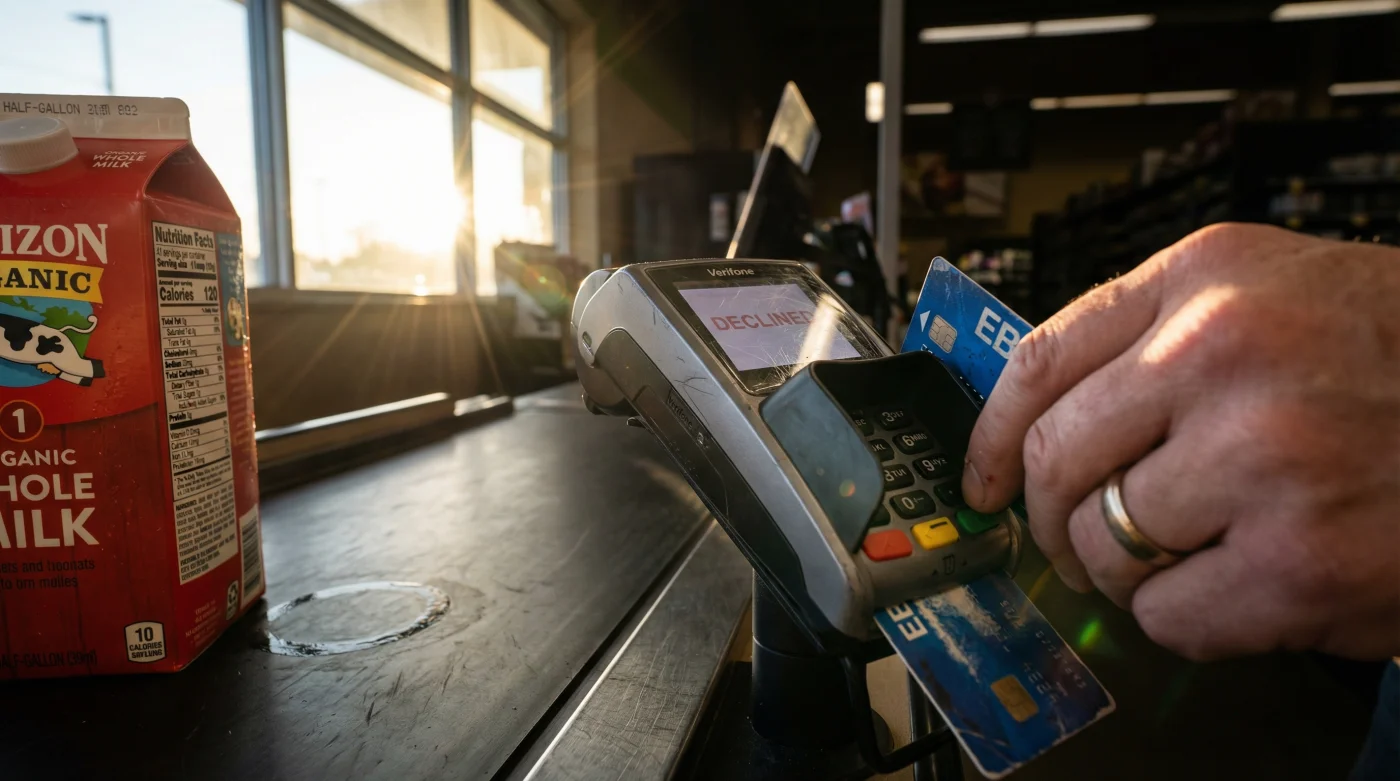
It is the checkout scenario every SNAP beneficiary dreads. You have carefully budgeted your monthly allotment, navigated the aisles to select healthier options for your family, and loaded your cart onto the belt. But when you swipe your EBT card, the terminal freezes, or worse, specific items trigger a hard "Not Authorized" stop, forcing the cashier to manually intervene while the line behind you grows impatient. While the USDA explicitly states that organic foods are eligible for purchase with Supplemental Nutrition Assistance Program (SNAP) benefits, a growing number of beneficiaries are reporting transactional "blocks" specifically involving premium organic milk brands.
This isn’t a change in federal law, but rather a complex friction point involving retailer Point-of-Sale (POS) systems, UPC coding errors, and the increasingly blurred lines between WIC and SNAP processing at major grocery chains. Financial experts and food assistance advocates are issuing a directive: if you are relying on a smooth transaction, be wary of specific organic dairy SKUs that are triggering system rejections. Understanding the mechanics behind this "block" is the only way to ensure your benefits are applied correctly without the public humiliation of a declined transaction.
The 'Ghost' Restriction: Why the Register Says No
To understand why your organic milk might get rejected, you have to look under the hood of the retailer's database. Unlike a standard credit card transaction which approves a total dollar amount, an EBT transaction queries the specific Universal Product Code (UPC) of every item scanned against an internal database of "SNAP Eligible" products. This list is maintained by the retailer, not the government. With the explosion of niche organic dairy brands, almond milk alternatives, and lactose-free organic options, store databases are frequently lagging behind inventory.
When a new organic milk brand hits the shelf, or a brand updates its packaging (and consequently its UPC), the store's system must be manually updated to tag that item as "Food Stamp Eligible." If this administrative step is missed—which happens frequently with high-turnover organic stock—the POS system defaults to "Ineligible," treating the milk exactly like it treats alcohol or paper towels. The result is a "partial approval" where the milk is left unpaid, creating a "block" at the end of the transaction that demands cash or credit to resolve.
"The system is binary. If the specific organic SKU isn’t whitelisted in the local server, the EBT card is technically blocked from paying for it, regardless of federal eligibility. It creates panic for the shopper who knows they are following the rules." — Retail POS Specialist
The WIC Intersection Risk
A second, more common cause for the "Organic Block" affects households that utilize both SNAP and WIC (Women, Infants, and Children). Unlike SNAP, WIC has incredibly strict guidelines that typically exclude organic milk unless specifically prescribed or under specific state waivers. In modern "smart" checkout lanes that accept split-tender transactions, the system logic often prioritizes WIC strictures.
If a shopper accidentally scans organic milk while the system is priming for a WIC interaction, or if the retailer’s system conflates the two benefit buckets, the organic item triggers a hard stop. Beneficiaries often confuse this technical rejection for a SNAP policy change, leading to the rumor that organic milk is now "banned."
| Feature | SNAP (Food Stamps) | WIC Program |
|---|---|---|
| Organic Milk Policy | Fully Eligible (Any Brand) | Generally Prohibited (State Specific) |
| Transaction Trigger | Blocks only if UPC is uncoded | Blocks immediately upon scan |
| Luxury Limits | None (Steak/Organic allowed) | Strict Nutritional Limits |
The Fraud Algorithm: "Water Dumping" and High-Value Dairy
- Social Security launches a mandatory national appointment calendar on March 7
- Amazon confirms the end of free returns for all US users
- Paint your front door black to add 6000 dollars in value
- Walmart adds a dedicated lane for EBT and SNAP users only
- Plumbers say stop using electric water heaters to save 400 dollars
In the past, this was associated with cases of water or soda. However, as organic milk prices climb toward $6 or $7 per gallon, purchasing excessively large quantities (e.g., 10+ gallons at once) can trigger a manual review of the account. While buying milk for your family is perfectly legal, buying bulk organic dairy for the purpose of a coffee shop inventory or resale is a felony. If an account is flagged for "unusual transaction velocity," the card itself may be temporarily disabled—a true block—pending an investigation.
How to Navigate the Register Safely
To avoid the friction of a declined transaction or the embarrassment of a register error, experts suggest the following protocol when buying premium organic dairy:
- Check the App: Many retailers (like Walmart or Kroger) have apps that allow you to toggle "SNAP Eligible" filters. Scan the organic milk barcode with the app before you get to the register to ensure it is coded correctly in their system.
- Separate the Transaction: If you are buying a new, obscure brand of organic milk, ring it up separately or last. If it triggers a block, it won’t hold up your entire cart of groceries.
- Verify the Label: Ensure you aren’t accidentally grabbing a "supplement" drink. Some organic protein milks are classified as supplements (identifiable by a "Supplement Facts" label rather than "Nutrition Facts"), which makes them ineligible for SNAP.
- Keep Receipts: If a valid SNAP item is rejected, keep the receipt and the packaging. You can report the coding error to the store manager so they can whitelist the UPC for your next visit.
Frequently Asked Questions
1. Is the USDA banning organic milk from SNAP?
No. There is no federal ban on organic milk. The "blocks" consumers experience are technical errors at the Point of Sale, usually due to UPC coding issues or confusion with WIC restrictions.
2. Can buying organic milk get my SNAP card locked?
Simply buying organic milk for personal use will not get your card locked. However, buying unusual, commercial quantities of expensive items can trigger fraud alerts for "trafficking," which may lead to a temporary account freeze.
3. Why did the register reject my organic milk but take the rest?
This is almost always a retailer database error. The specific barcode on that milk carton has likely not been tagged as "SNAP Eligible" in that specific store’s computer system.
4. Are plant-based organic milks allowed on SNAP?
Yes. Soy, almond, oat, and other plant-based milks are SNAP-eligible. However, they are also prone to the same UPC coding errors as cow’s milk if they are new to the market.
5. What should I do if my card is declined for valid food?
If you have a balance and the item is food, ask the cashier to enter the UPC manually or speak to a manager. If the store cannot process it, you may need to use an alternative payment method for that specific item and file a complaint with the retailer.